
Understand Japan before you set foot in it
Japan captivates not only with its sights, but with how it works day to day - built on respect, ritual and attention to detail. Here you will find a short, practical introduction to the culture that will help you feel confident: from the bow of greeting to the silence on the train.
Personal conduct - how to behave
You often hear that Japan is a country full of bans, rules and complicated customs. In practice, most of them have a very simple purpose: not to get in other people's way.
Japanese social life rests largely on harmony, respect for your surroundings and attention to other people's comfort. That doesn't mean every tourist has to learn hundreds of etiquette rules. A few basic customs are enough to find your feet and avoid an unnecessary faux pas.
What to do
In Japan ○ means “right” and × means “wrong” - you will see these signs everywhere.
- Give a slight bow when greeting, saying goodbye or thanking someone. Tourists don't need to perform deep, formal bows. A simple nod or a small bow is perfectly enough. Shaking hands isn't a traditional Japanese custom, although Japanese people who deal with foreigners sometimes offer their hand themselves.
- Take your shoes off before entering a home. By the entrance there is usually a lowered area called the genkan, where shoes are left. Beyond it you mostly walk in socks or in slippers provided by the host. Rooms with tatami floors are usually entered without slippers.
- Watch what others do on escalators. Traditionally, in Tokyo and much of Japan people stand on the left, while in Osaka and parts of the Kansai region they stand on the right. More and more often, though, you will see signs asking people to stand on both sides and not walk on escalators. The simplest approach is to do what the people around you do.
- Hand over and receive important items with both hands. This applies especially to business cards, documents, gifts and money. It is a gesture of respect and attentiveness.
- Put your phone on silent on public transport. On a crowded train or metro, silence is completely normal.
- Queue politely. Japanese people take the order of a queue seriously, including when boarding the metro and trains. Platforms often have painted lines showing where to wait before the train arrives.
- Let passengers get off first. Only then do you get on.
- Clean up after yourself. There are relatively few rubbish bins in Japan, so it is worth carrying a small bag and taking your rubbish back to the hotel or somewhere you can dispose of it properly.
What to avoid
- Don't talk on the phone on trains and the metro. A quiet conversation between passengers is of course fine, but loud talking is frowned upon. Phone calls in the carriage are especially unwelcome.
- Don't eat on the city metro and ordinary commuter trains. It usually isn't strictly forbidden, but culturally it is avoided. It is a completely different story on the Shinkansen and many long-distance trains - eating there is normal, and buying an ekiben, a boxed meal for the journey, is practically part of Japanese railway culture.
- Don't smoke outside designated areas. Many cities have local rules banning smoking on the street and in public spaces outside designated zones. Breaking them can mean a fine, and the amount depends on the city or district.
- Don't be loud in public places. Shouting, very loud conversations or playing music from your phone can draw far more attention than in Europe.
- Don't blow your nose loudly at the table or right next to other people. If you need to, step aside or use the restroom.
- Don't stick your chopsticks upright in rice. In Japan, chopsticks placed like this are associated with funeral rites and offerings made to the dead.
- Don't pass food from chopsticks to chopsticks. After a cremation, family members traditionally pass the bones of the deceased to one another using chopsticks. That is why doing it at the table is one of the most distinctive Japanese taboos.
- Don't wear very strong perfume. Especially in small restaurants, sushi restaurants and places where the aroma of the food is an important part of the experience. A strong scent can bother other guests and get in the way of enjoying the dishes.
- Don't cross the street on a red light. Even when the road looks completely empty, most people wait for green. Osaka, of course, sometimes plays by its own rules. :)
- Don't photograph maiko and geiko without permission or block their way. They are not attractions set up on the street for tourists, but people doing their job. In Kyoto especially, intrusive photography became such a problem that some areas introduced extra restrictions.
- Don't walk onto private property or private lanes just to take a photo. A place looking picturesque doesn't make it public space.
- Don't touch everything in temples and shrines. Watch the signs and how locals behave. Not every part of a temple is meant for tourists.
💡 I go into this in more depth in the guide: what actually matters, and separately how to sort your rubbish.
At the table
A few simple customs are worth knowing in Japanese restaurants.
- Before eating, people often say “itadakimasu” いただきます, and after the meal “gochisōsama deshita” ごちそうさまでした, putting their palms together and bowing their head slightly. It is a thank-you for the meal - not an obligation for tourists, but a really nice gesture.
- Slurping ramen or soba isn't considered bad manners. With some dishes it is completely normal.
- Tipping isn't standard in Japan. If you try to leave extra money, staff may even run after you, thinking you forgot your change.
- In many restaurants you pay at the register on the way out, not at the table.
Temples and shrines
- When you enter the grounds of a Shintō shrine, stay calm and remember that it isn't just a tourist attraction.
- Many people give a small bow as they pass through a torii gate.
- At some shrines, before praying, people perform a symbolic purification with water at a special spot called the temizuya.
- You don't have to copy every ritual if you are not sure how it is done, though. Calm, respectful behaviour is entirely enough.
Onsen - hot spring baths
Onsen are hot springs and one of the best ways to recharge. The rule is simple: first you wash thoroughly, seated, at the shower, and only then enter the shared bath - no swimsuit, and the small towel stays out of the water. People with tattoos may meet restrictions, but tattoo-friendly places and private kashikiri baths are becoming more common.
Popular fake news about Japanese culture
A lot of myths have grown up around Japan, and they get repeated endlessly online as “rules of Japanese culture”. Some of them have roots in real customs, but they have been simplified or exaggerated so much that they have little to do with reality any more.
Fake news“The louder you slurp and smack your lips, the more you show the food is good”
Loud lip-smacking is not a way of complimenting the chef in Japan. The confusion comes from eating noodles - ramen, soba or udon.
Japanese people often draw the noodles into their mouths together with air. It helps you eat very hot noodles while cooling them down. With some kinds of noodles it can also help you taste their aroma. The sound that comes with it is simply a natural result of eating this way.
So the point isn't to make as much noise as possible. Nor is it about loudly slurping the broth. The official guide by JNTO (the Japan National Tourism Organization) puts it very simply: focus on drawing the noodles into your mouth, not on making noise for its own sake. And if you don't want to eat that way, you don't have to.
Fake news“It's rude to finish everything on your plate”
You can find online advice claiming that leaving a little food is a sign of good manners in Japan and a signal to your host that they served you enough. That is not a Japanese rule.
Quite the opposite - it is generally seen as good form to eat what you have been served rather than waste food needlessly. Official JNTO materials even point out that leaving leftovers may be frowned upon.
At the same time, don't turn it into another extreme. With ramen you don't have to drink all the broth. You can eat the noodles and toppings and leave some of the soup - that is completely normal.
Fake news“Tipping is offensive in Japan”
The truth is much simpler: Japan basically has no tipping culture.
In a restaurant, hotel or taxi you pay what is on the bill. Staff don't expect any extra money. If you leave money on the table, an employee may even think you simply forgot it and try to give it back.
That doesn't mean handing over a tip will automatically “offend a Japanese person”. There is also a traditional custom called kokorozuke - giving money as a token of gratitude in certain situations. When such money is given, it is usually done discreetly and in an envelope.
So:
- “Don't tip, or you'll offend a Japanese person” - no.
- “You don't need to tip, because nobody expects it from you” - yes.
You don't have to. But it's a lovely thing to do“You have to say itadakimasu before eating”
Itadakimasu is a traditional phrase said before starting a meal. You can understand it roughly as an expression of gratitude for the food you have received. People often put their palms together in front of them and bow their head slightly as they say itadakimasu.
After the meal you can say gochisōsama deshita to thank everyone for the food. Here, too, you can put your palms together and give a small bow.
It is a really nice gesture, and Japanese people usually appreciate it when a foreigner knows it. But most importantly: it is in no way an obligation for tourists. Nobody will think you are rude just because you didn't say itadakimasu before eating. JNTO itself notes that visitors to Japan are not required to use these phrases.
Not quite true“You're not allowed to eat while walking in Japan”
There is no general rule against eating while walking. It is true that, more often than in Europe, you will see someone buy food and then stop next to the shop or stall to eat it there. In some places eating on the move is also clearly frowned upon.
But at festivals, markets and street-food streets, eating outside a restaurant is completely normal. What matters more is not bothering others, not making a mess and not squeezing through a crowd with your food.
Fake news“You're not allowed to talk on trains in Japan”
You can talk. It is just done more calmly and quietly than in many Western countries.
Phone calls on trains or the metro are seen much more negatively. JNTO notes that a quiet conversation between passengers is acceptable, while phone calls are generally frowned upon.
So there is no need to sit in absolute silence for half an hour. Just don't behave as if the whole carriage were part of your conversation.
Not everywhere“In Japan you have to take your shoes off everywhere”
Shoes come off mainly in homes, ryokans and some traditional restaurants, temples and other places. When you do need to take them off, it is usually very easy to tell - from a genkan, shoe shelves, slippers or a notice at the entrance.
Pay special attention to rooms with tatami floors - you don't walk on tatami in shoes, and usually not in slippers either. JNTO confirms that whether you remove your shoes depends on the specific place, and is not a rule for every interior.
Fake news“Sushi has to be eaten with chopsticks”
Nigiri can be eaten either with chopsticks or with your fingers. Both ways are correct.
It is another example of tourists sometimes trying to follow “Japanese etiquette” more strictly than the Japanese themselves. JNTO explicitly describes both ways as normal.
The bottom line
Japanese etiquette isn't about memorising a hundred prohibitions. Many of the online “rules of Japan” are exaggerated, taken out of context or simply untrue.
The most universal rule is much simpler: watch the people around you, respect the place you are in, and try not to get in other people's way.
And if, as a tourist, you get a bow wrong, forget to say itadakimasu or can't slurp your ramen elegantly - the world really won't end. :)
The most important rule
In recent years there has been more and more talk in Japan about the problems of overtourism. There have been cases of people walking onto private property, blocking streets to take photos, littering and damaging historic sites.
You don't need to know the whole of Japanese etiquette to be well received. It is enough to remember one rule:
Pay attention to the people around you and try not to disturb others with your behaviour.
Compared with many other nationalities visiting Japan, Poles mostly behave very well. Many Japanese rules simply feel familiar to us - we take our shoes off when we come home, we don't tend to shout on public transport, we know how to queue and we usually respect other people's privacy.
There are exceptions everywhere, of course, but as tourists we really have nothing to be ashamed of.
A trip to Japan can really change the way you look at everyday life, public space, other people and yourself. The better we know local customs, the easier it is to blend in and truly feel Japan, rather than just watching it from a tourist's point of view.
We are guests there.
Let's represent Poland well. :)
Art, craft and pop culture
What Japan makes - from the tea ceremony to the neon of Akihabara. Tradition and futurism pass each other on the same street.
Art and craft
The tea ceremony, calligraphy, ikebana, ceramics, lacquerware, swords, zen gardens - Japanese art is a mastery of detail and patience. The wabi-sabi aesthetic finds beauty in imperfection and impermanence. In many cities you can join short workshops and make something with your own hands.
Matsuri - festivals
Matsuri are the heart of the local community: portable mikoshi shrines carried through the crowd, food stalls (yatai), dances and fireworks displays (hanabi) in summer. Every region has its own - catching a matsuri is often the strongest memory of a trip. It is worth checking the dates, as some happen on just one weekend a year.
Pop culture - anime, games and the city
Modern Japan is also anime and manga, video games, gacha machines, karaoke, themed cafes and neon districts like Akihabara or Shibuya. Tradition and futurism do not clash here - on the contrary, they pass each other on the same street. It is one of the things that impresses travellers the most.
What I listen to - my picks
Music is the quickest way to get a feel for a country before you set foot in it. Play a video right here, or jump over to Spotify or Apple Music.
Funk, Soul, Disco

CYM
Billyrrom When feelings change colour Open the song →
DUNE
Billyrrom For everyone walking against the wind Open the song →
Funky Lovely Girl
Billyrrom Bittersweet disco for a summer night Open the song →
Soulbloom
Billyrrom Love you have to tend like a flower Open the song →J-Rock, Electronic

Kaijū (怪獣)
Sakanaction A curiosity that refuses to be silenced Open the song →
Tabun, Kaze. (多分、風。)
Sakanaction A summer moment frozen in synths Open the song →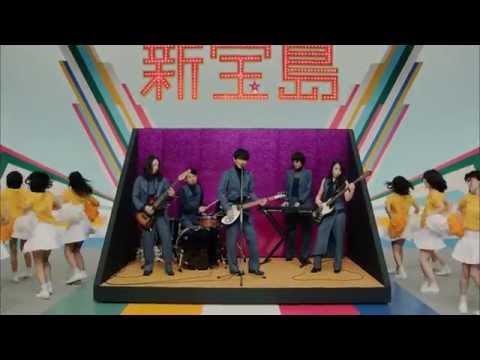
Shin-Takarajima (新宝島)
Sakanaction A creator's promise: “I'll draw it carefully” Open the song →
Music (ミュージック)
Sakanaction A whisper that grows into a dance-floor explosion Open the song →J-POP, R&B, Soul

Hana
Fujii Kaze Discover your inner flower Open the song →
Matsuri (まつり)
Fujii Kaze Life is a festival - celebrate every day Open the song →
Hachikō
Fujii Kaze Loyalty stronger than time Open the song →
YASASHISA (優しさ)
Fujii Kaze Kindness is the strongest thing there is Open the song →💡 Want your plan to include temples, matsuri, onsen or pop-culture districts? Mark it while designing your trip - I will build the route around your interests.